
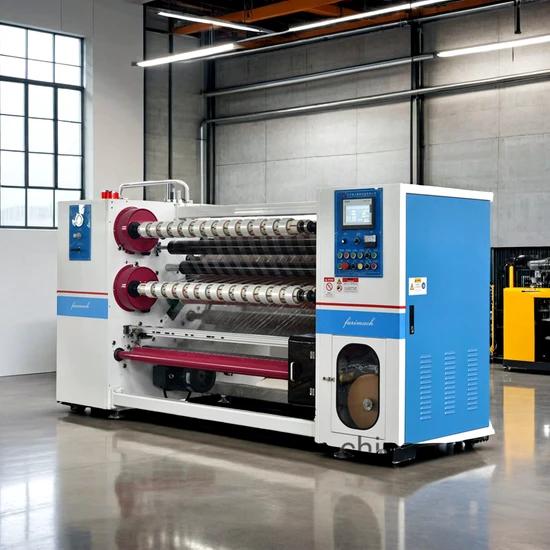
If you manufacture BOPP tape, the slitter rewinder machine decides your production speed, roll quality, and waste levels.
Many factories focus only on coating or printing machines. But the real efficiency often comes from the slitting stage. A poor slitter rewinder creates uneven rolls, telescoping rolls, and frequent downtime.
This guide explains what matters when choosing a slitter rewinder machine for BOPP tape manufacturing. We will cover machine types, important features, and what manufacturers should check before buying.
What a Slitter Rewinder Machine Does in Tape Production
In BOPP tape production, large jumbo rolls come from the coating machine. These rolls are usually 1000–1600 mm wide.
A slitter rewinder machine converts those jumbo rolls into smaller rolls used in packaging.
The machine performs three main tasks:
- Unwinding the jumbo roll
- Slitting the web into smaller widths
- Rewinding the slit rolls into finished tape rolls
If the slitting process is not precise, the final rolls will have defects like uneven edges, wrinkles, or loose winding.
That is why the slitter rewinder machine plays a critical role in tape converting.
Why Slitting Quality Matters in BOPP Tape Manufacturing
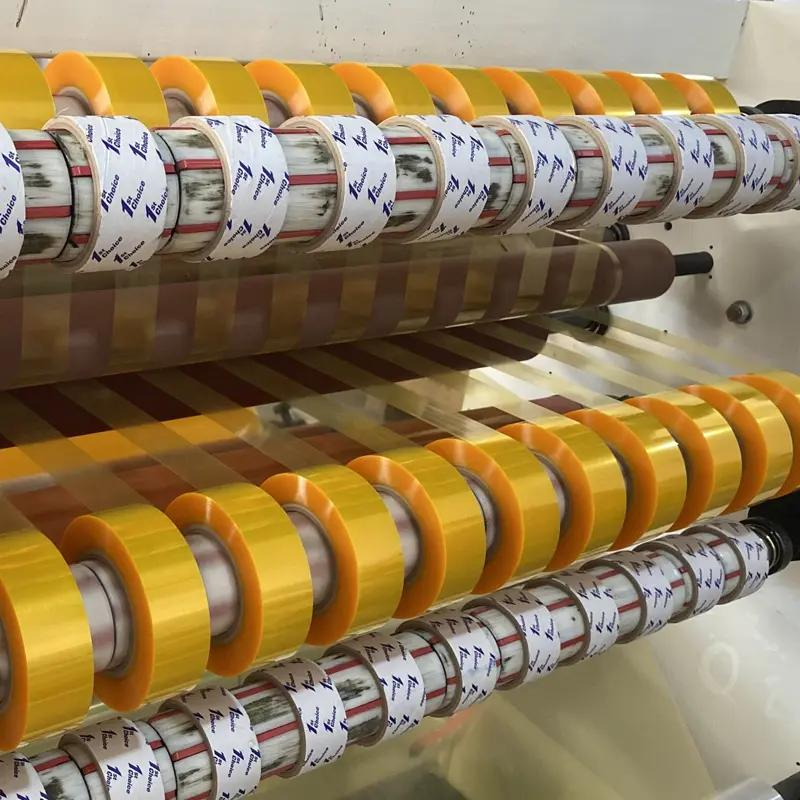
Poor slitting quality affects several parts of the production chain.
For example:
- Uneven edges cause tape breaking during packaging
- Loose winding creates telescoping rolls
- Poor tension control results in wrinkles
Factories that improve slitting quality usually see:
- Higher production speed
- Less material waste
- Better roll appearance
- Fewer customer complaints
According to packaging industry reports from 2024, converting inefficiencies can increase production cost by 8–15% in adhesive tape manufacturing.
Types of Slitter Rewinder Machines
Different tape manufacturers use different slitter designs depending on production volume.
Center Winding Slitter Rewinder
In this machine, rolls are rewound using core shafts connected to motors.
Advantages:
- Good tension control
- Suitable for narrow rolls
- Ideal for smaller production lines
Limitations:
- Lower production speed compared to surface winders.
Surface Winding Slitter Rewinder
Surface winding machines rewind rolls using driven drums that rotate the rolls.
Advantages:
- Higher speed
- Better roll density
- Good for large-scale tape production
Most modern BOPP tape factories use this system.
Center-Surface Combination Machines
These machines combine both systems.
They offer:
- Better tension control
- Higher roll quality
- Flexibility for different materials
Many large converters choose this type for high-speed operations.
What to Look for in a BOPP Tape Slitter Rewinder
Automatic Tension Control
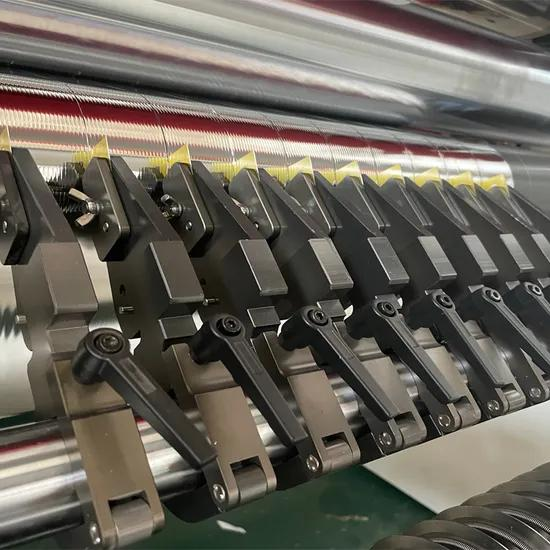
Tension control keeps the film stable during slitting.
Without proper tension control:
- rolls become loose
- tape edges become uneven
- web breaks during production
Modern machines use load cells and PLC control systems to maintain consistent tension.
Precision Slitting System
High-quality machines use:
- Razor blade slitting
- Shear slitting
- Score slitting
For BOPP tape production, razor slitting is commonly used because it provides clean edges at high speed.
Shaft or Shaftless Unwinding
Shaftless unwinding systems allow operators to load heavy jumbo rolls faster.
Advantages:
- Faster roll loading
- Less downtime
- Better operator safety
This feature is common in modern converting machines.
High-Speed Capability
A good BOPP slitter rewinder machine usually operates between:
150 – 500 meters per minute
High-speed machines increase productivity and reduce manufacturing cost per roll.
Typical Technical Specifications
Most BOPP tape slitter rewinders share similar specifications.
Typical configuration includes:
- Web width: 1300 – 1600 mm
- Slitting width: 12 mm – 72 mm
- Machine speed: up to 500 m/min
- Unwind diameter: up to 800 mm
- Rewind diameter: up to 300 mm
However, the exact specifications depend on the manufacturer and production requirements.
Common Problems Caused by Low-Quality Slitters
Factories that use poorly designed machines often experience:
- Edge curling
- Tape blocking
- Roll telescoping
- Frequent blade changes
- Production downtime
These issues increase maintenance cost and reduce machine efficiency.
Industries That Use BOPP Slitting Machines
BOPP tape slitters are used in many industries.
Examples include:
- Packaging tape manufacturing
- Printed tape converting
- Industrial adhesive tape production
- Stationery tape manufacturing
The global adhesive tape market reached over $72 billion in 2024 and continues growing due to e-commerce and logistics demand.
How to Choose the Right Machine for Your Production
Production Volume
If your factory produces large quantities of tape, choose a high-speed automatic slitter rewinder.
Smaller operations may prefer semi-automatic machines.
Roll Width Range
Make sure the machine supports the tape widths you produce.
Common packaging tape sizes include:
- 24 mm
- 36 mm
- 48 mm
- 72 mm
Automation Level
Modern machines offer features like:
- Automatic knife positioning
- Auto tension control
- PLC touch screen operation
These features reduce operator errors and improve production stability.
Why Many Manufacturers Prefer Indian Slitter Rewinders
India has become a major supplier of converting machinery.
Reasons include:
- competitive machine cost
- strong mechanical design
- easy spare parts availability
- global export support
Many BOPP tape producers in Asia, Africa, and South America now use Indian-built slitter rewinder machines.
Conclusion
The slitter rewinder machine is one of the most important machines in BOPP tape manufacturing.
It directly affects roll quality, production speed, and waste levels.
When choosing a machine, manufacturers should focus on:
- tension control
- slitting precision
- automation level
- production capacity
Investing in a reliable slitter rewinder improves efficiency and reduces long-term production costs.
FAQs
1. What is the speed of a BOPP tape slitter rewinder machine?
Most machines operate between 150 and 500 meters per minute, depending on design and automation level.
2. Which slitting method is best for BOPP tape?
Razor blade slitting is widely used because it provides clean edges and works well at high speeds.
3. What is the standard width of BOPP tape rolls?
Common widths include 24 mm, 36 mm, 48 mm, and 72 mm.
4. How many rolls can a slitter rewinder produce per hour?
Production depends on speed and roll size, but high-speed machines can produce several hundred rolls per hour.
5. What is the difference between slitting and rewinding?
- Slitting: cutting a wide web into narrow strips
- Rewinding: winding those strips into finished rolls
Both processes happen in a slitter rewinder machine.